|
ramé-hart
Newsletter


March
2026 |
| Would you be able to see if we couldn't measure contact angles? |
|
Since the Medieval Age, people have understood that lenses can be used as an aid to correct vision. In the late thirteenth century, monks and scholars began using an early version of spectacles to assist them in their reading and writing1. As literacy has become an essential part of participating in the modern world, so too has the ability to view small details from a distance. In this newsletter we will explore how contact angle measurement is instrumental in the field of vision correction and wearable optics. Glasses remain the predominant tool for vision correction throughout the world today. Not only can they be used for sharpening your eyesight, but they are also often seen as fashionable.
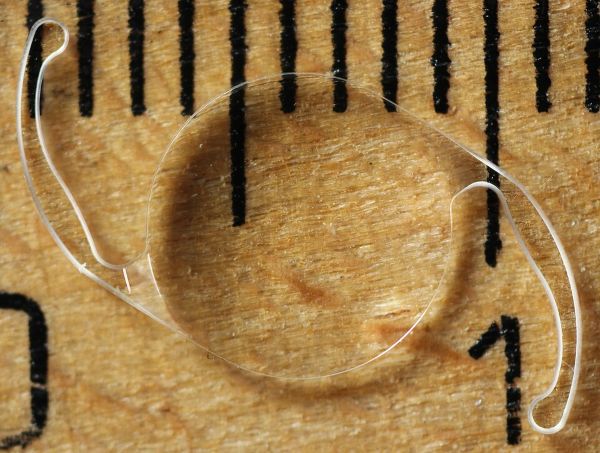
Since glasses are so widespread, many people are familiar with the challenges that can occur when wearing them. Walking inside from the cold causes lenses to fog up. Touching the lenses can leave fingerprints and smears. Debris like pieces of skin and eyelashes can collect on lenses. Water droplets can accumulate on the lenses when it is raining. Fortunately, surface scientists have developed lens coatings that have become increasingly affordable in recent years. Hydrophobic coatings have a high contact angle with water and can help repel water and improve the cleanability of glasses. Oleophobic coatings, conversely, have a high contact angle with oils from fingers and other skin surfaces. Anti-fog coatings are often superhydrophilic, which causes condensed water to instantly spread into a thin film and quickly evaporate. Hydrophobic anti-fog coatings work similar to water-repelling coatings. A newer alternative to glasses is contact lenses. First developed in the late 1800’s, contact lenses were first made from glass, and later polymethyl methacrylate (more commonly known as acrylic) and other plastics. Silicone hydrogels were introduced in the 1980’s and have become the standard material for contact lenses today due to their gas permeability and flexibility. Yet silicone hydrogels have a serious downside – they are hydrophobic. Wettability is a critical component of contact lenses, which determines how a lens interacts with the tear film of the eye. Disruption of the tear film causes discomfort and limits how long someone can comfortably wear contact lenses2. Thus, the surface of contact lenses must be treated or coated to address the innate properties of the materials used to form the bulk of the lens. The wettability of contact lenses is typically investigated using the captive bubble technique3. This is because it is essential to study the lens while it is fully hydrated. We recently released a video showing how DROPimage Advanced can be used to measure advancing and receding contact angles with a captive bubble on a curved surface using the add/remove volume technique (note the sample in the video is not a contact lens). The final type of lens used for correcting vision are intraocular lenses (also known as IOLs). When someone develops cataracts, their vision becomes cloudy. This condition can lead to blindness as cataracts continue to proliferate in the crystalline lens at the back of the eye. To treat this, doctors surgically remove the crystalline lens and install an IOL as a replacement. Today’s IOLs are made from flexible acrylic that can be folded to limit the size of the incision needed for insertion.
There is currently a debate over whether the hydrophobicity of lens material is clinically relevant for IOLs, with recent studies showing that hydrophilic lenses pose a risk of posterior capsular opacification (PCO) to at least some patients4, 5, 6. PCO is the most common long-term complication arising from cataract surgery, and results from lens epithelial cells migrating to the posterior capsule, which causes the same cloudy vision as a cataract. Hydrophobic lenses are believed to discourage such migration. Thus, contact angle goniometry is an essential tool in IOL development. ramé-hart instruments have been used to study develop many of the technologies that we use today to see the world around us. Whether you are measuring contact angles on lens coatings or any other surface, we are here to help. Contact us to get a quote or inquire about what instrument is best for your application.
Notes |
| Product of the Month: ramé-hart Environmental Fixture |
|
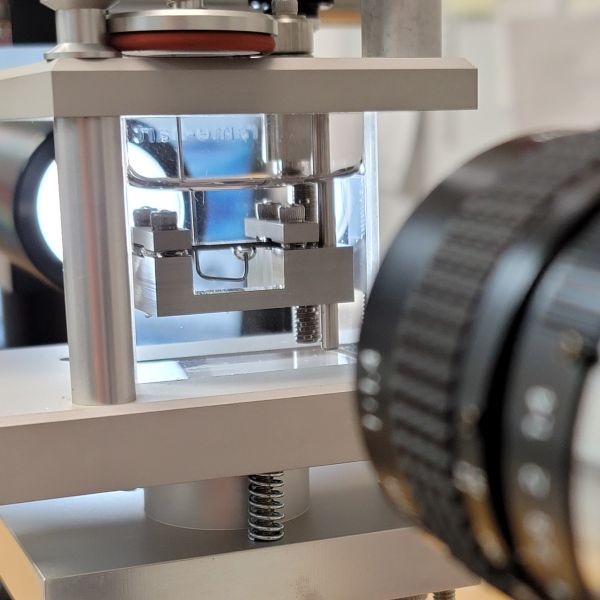
The Environmental Fixture (p/n 100-14) is designed for captive bubble studies and is an ideal tool for contact lens hydration studies as discussed above. It also supports liquid/liquid studies, such as interfacial tension pendant and sessile drops, and is supported on all ramé-hart goniometers. It includes a distortion-free Quartz Cell and an adjustable suspension stage for inverted studies or immersion in a bulk liquid. The removable lid makes access and storage easy. The Environmental Fixture can be purchased on our webstore or quoted with any of our instruments. Contact us today to find out more. |
|
Regards,
Carl Clegg |
|
|